
RxPrompt
UI/UX case study for self-guided audio tour app for art galleries
Izumi Dale
Design & Documentation
Project overview
DUCO: a guided experience:
Project: UX case study for the fictional Chester Art Gallery
Goal: Make art tours accessible with multilingual audio guides and optional transcripts
The Problem
Many visitors struggle with audio guides if English isn’t their first language, leaving stories untold and experiences limited.
Designing the Solution
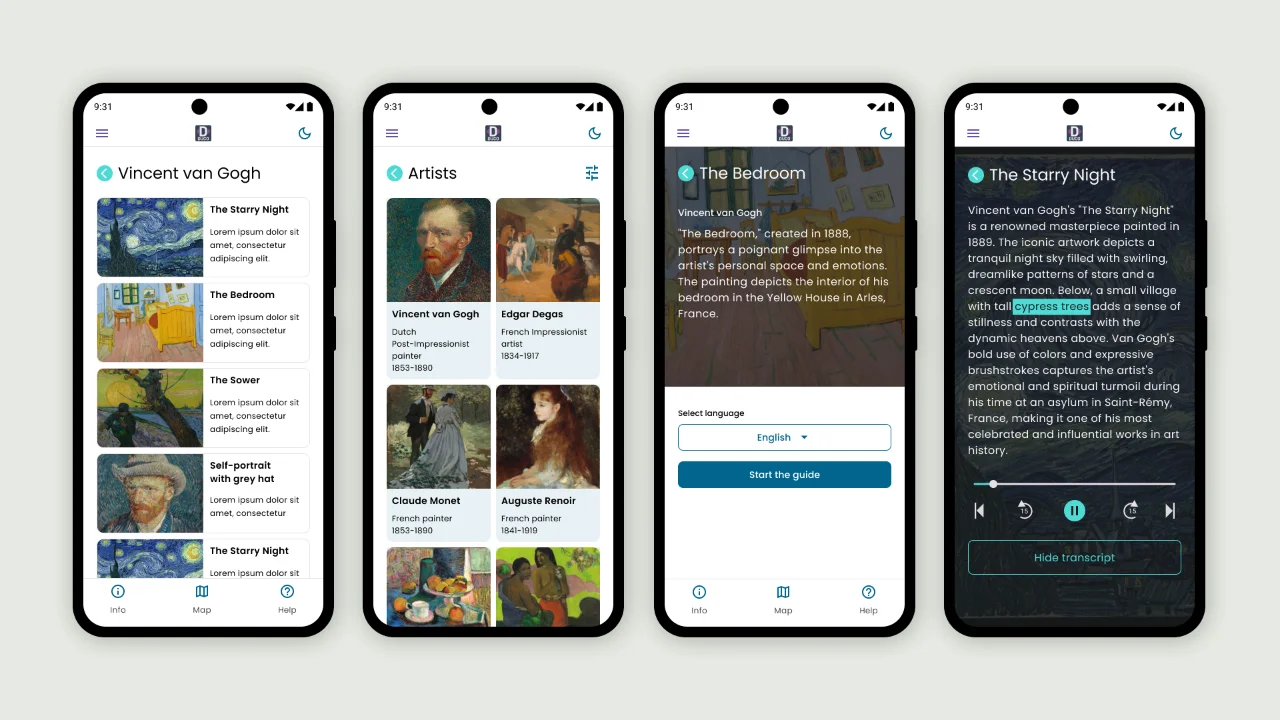
An intuitive app with clear navigation, language selection, audio guides, and transcript support, designed to minimize cognitive load while enhancing accessibility.
Understanding the user
Research
Online interviews and empathy maps confirmed the need for:
- Multi-language options
- Transcripts synced with audio
- Easy search/filter options
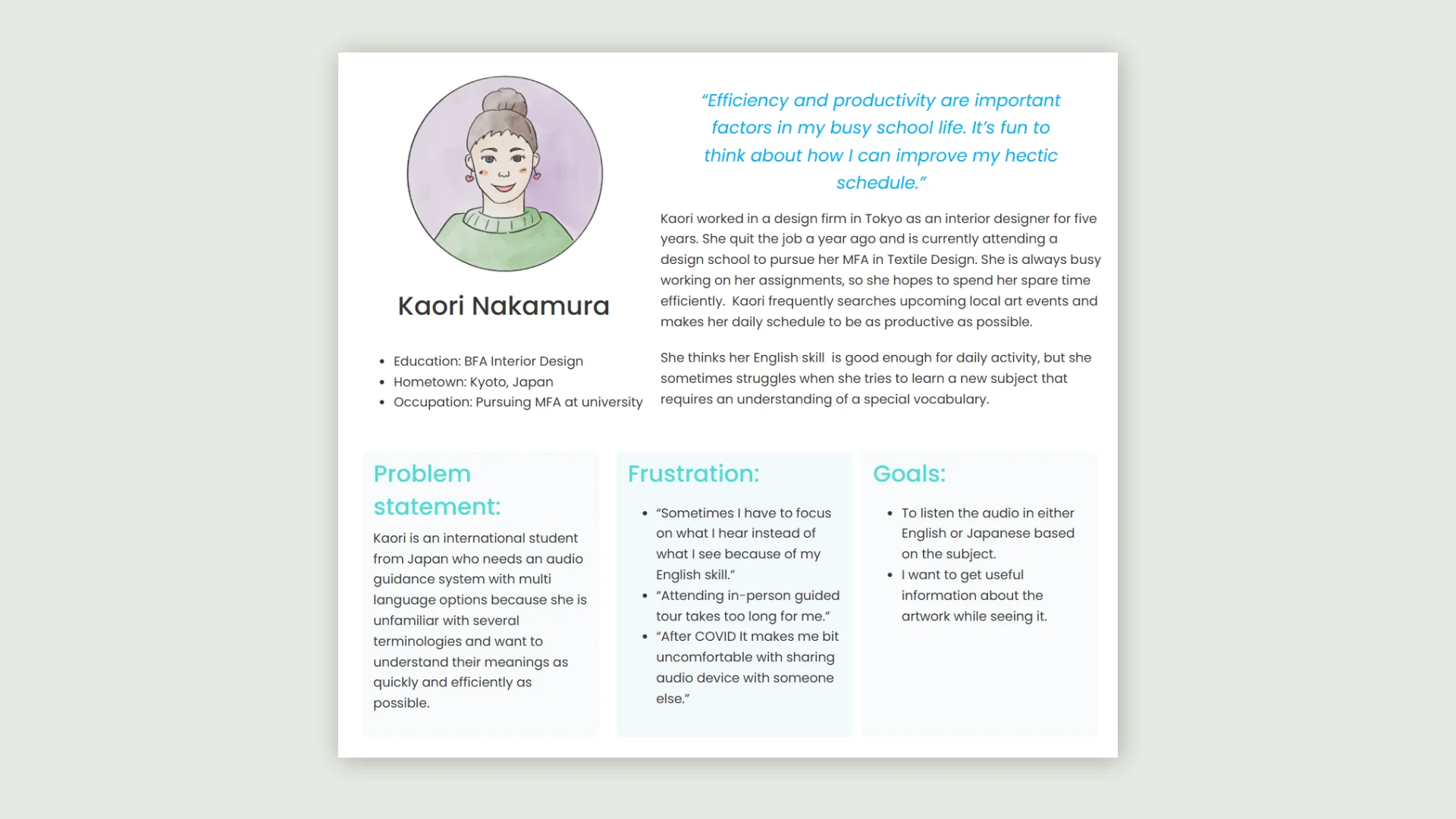
User persona
Represented a target user to guide design decisions.
Design process
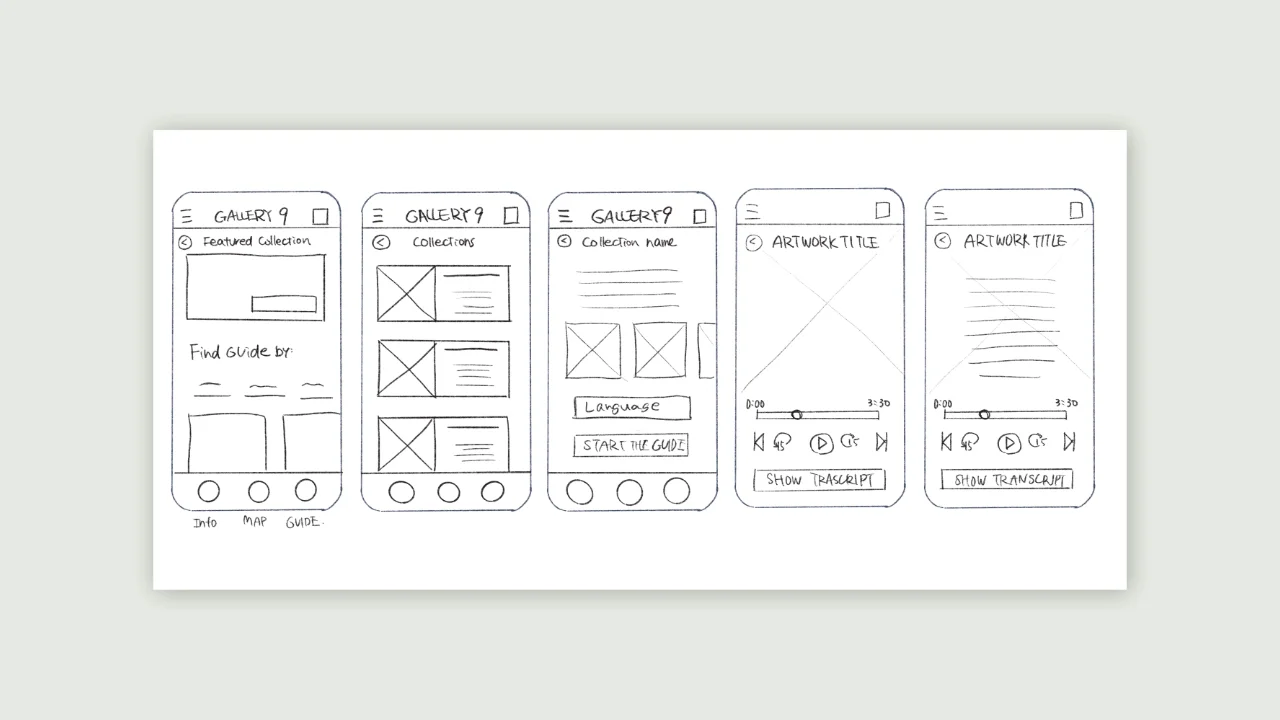
1. Paper wireframes
Focused on home screen, language selection, and audio player with transcript toggle.
2. Digital wireframes
Highlighted language selection and search options to streamline access.
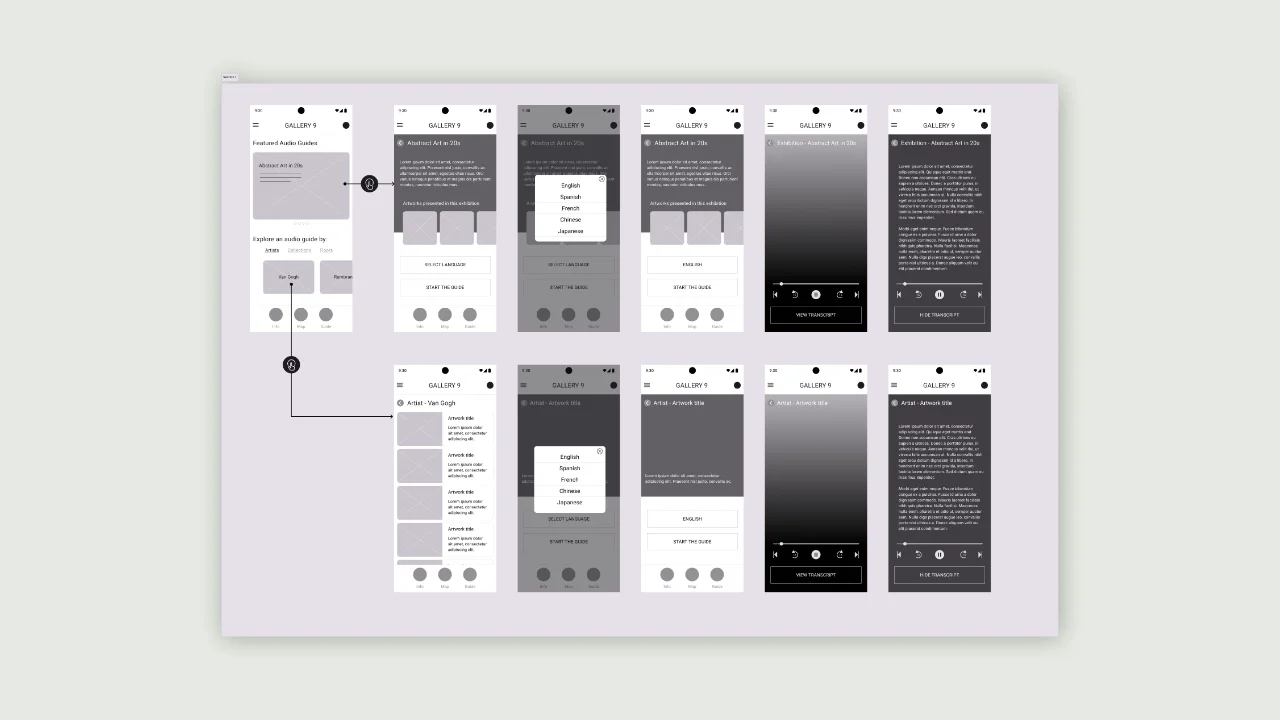
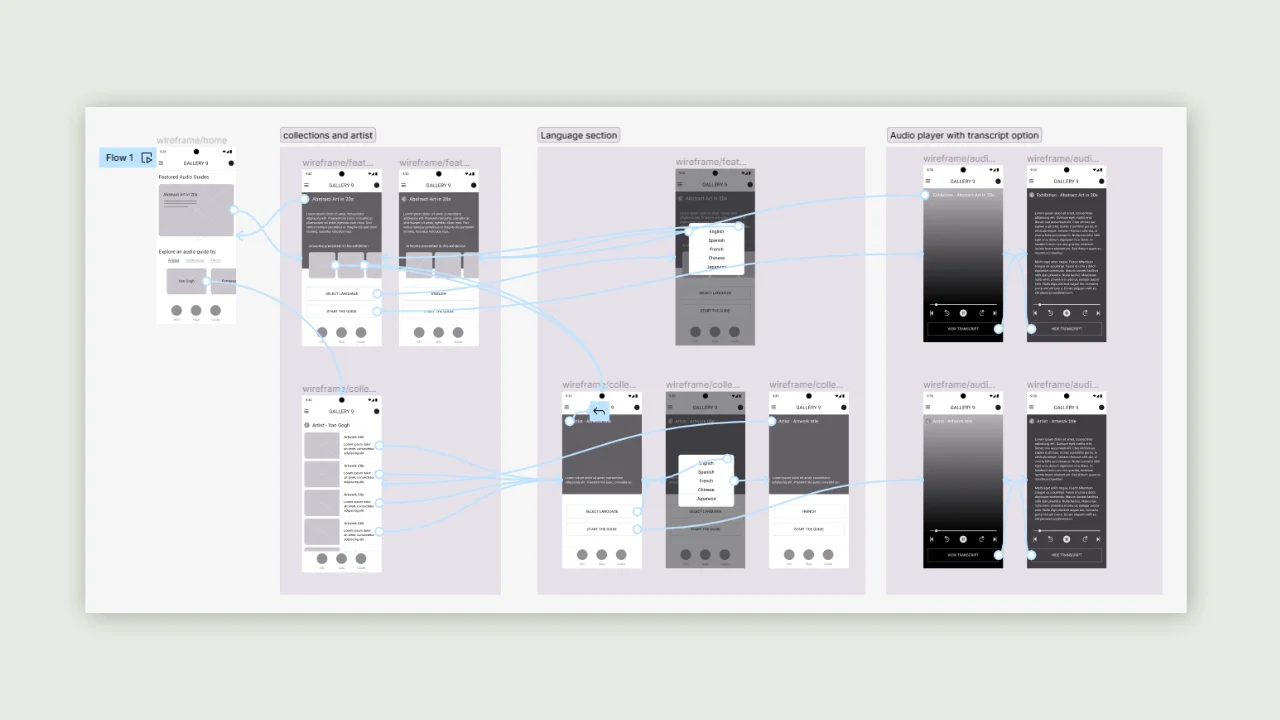
3. Low-fidelity prototype
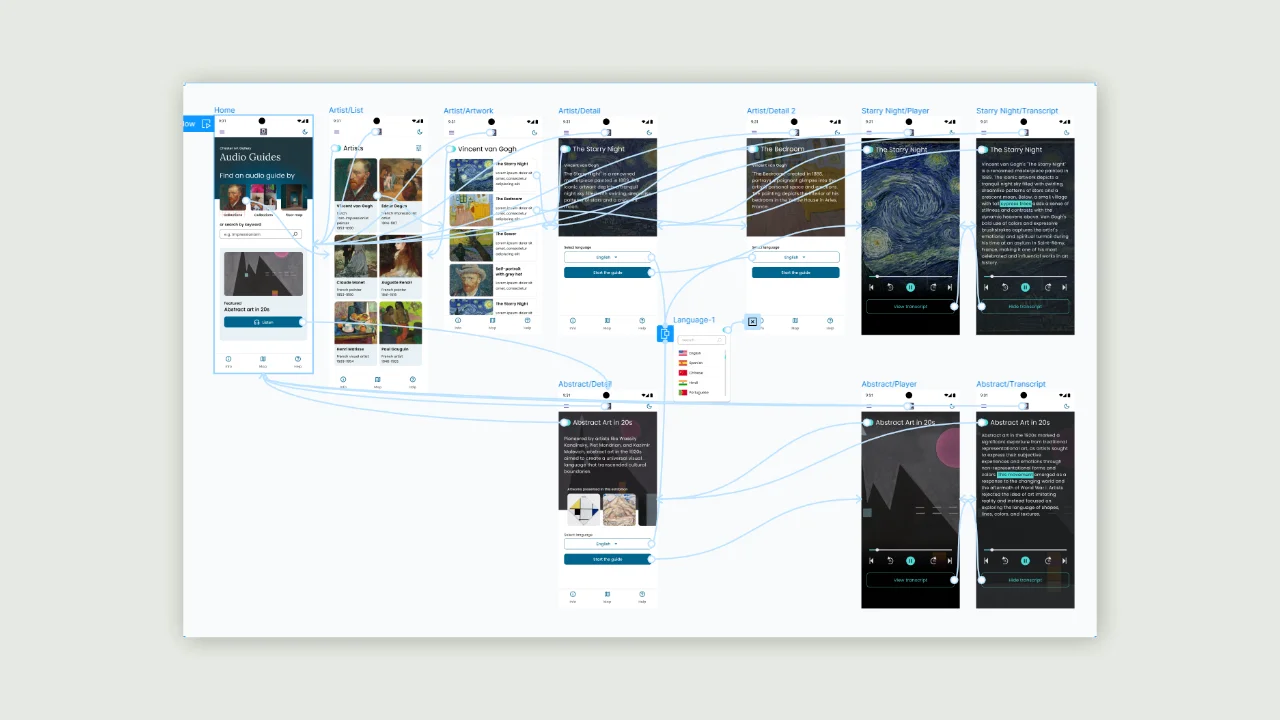
Demonstrated primary flow: select guide → choose language → play audio → toggle transcript.
Usability findings
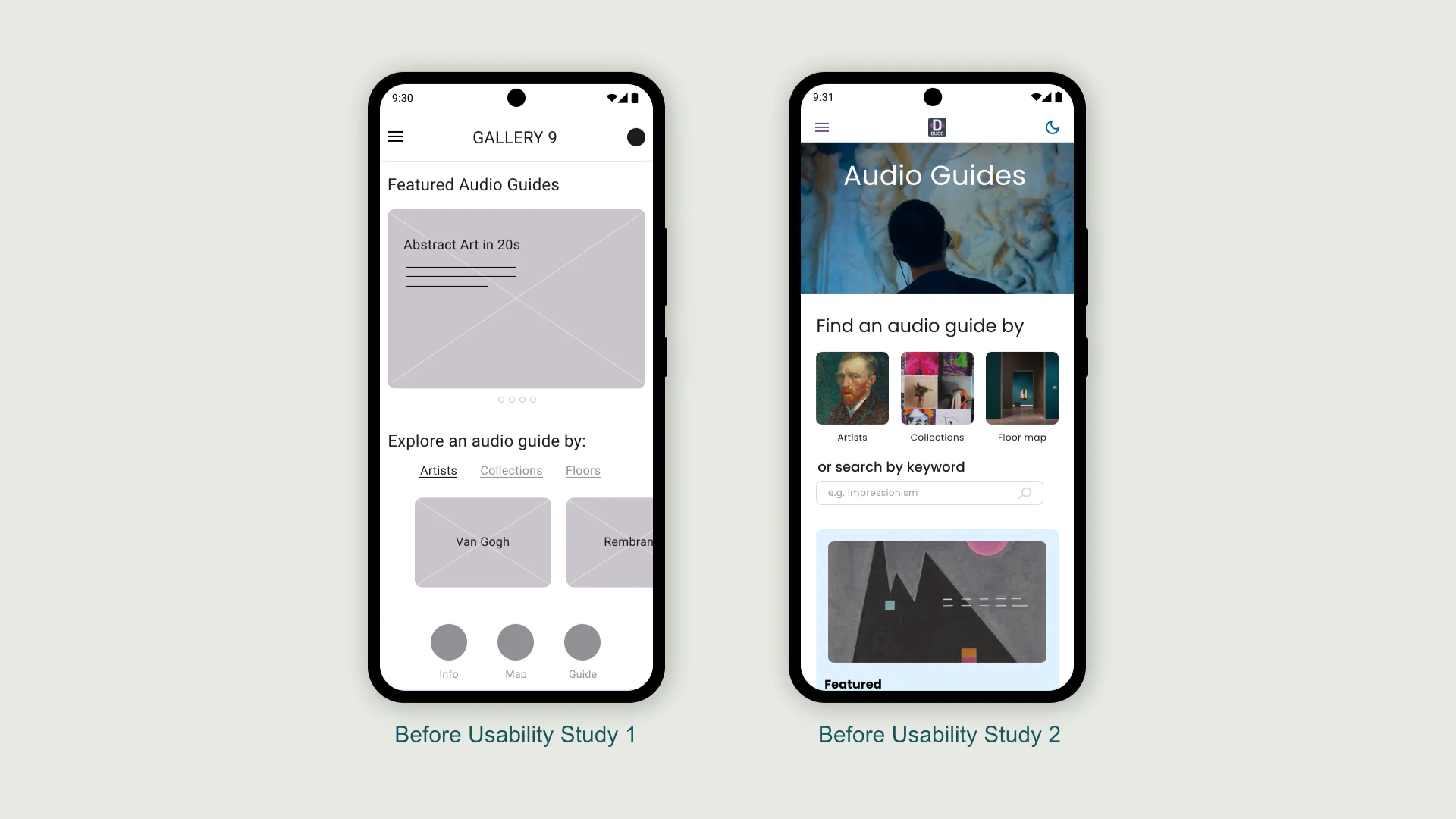
- Round 1: Hard to find guides, transcripts unsynced, search lacking filters
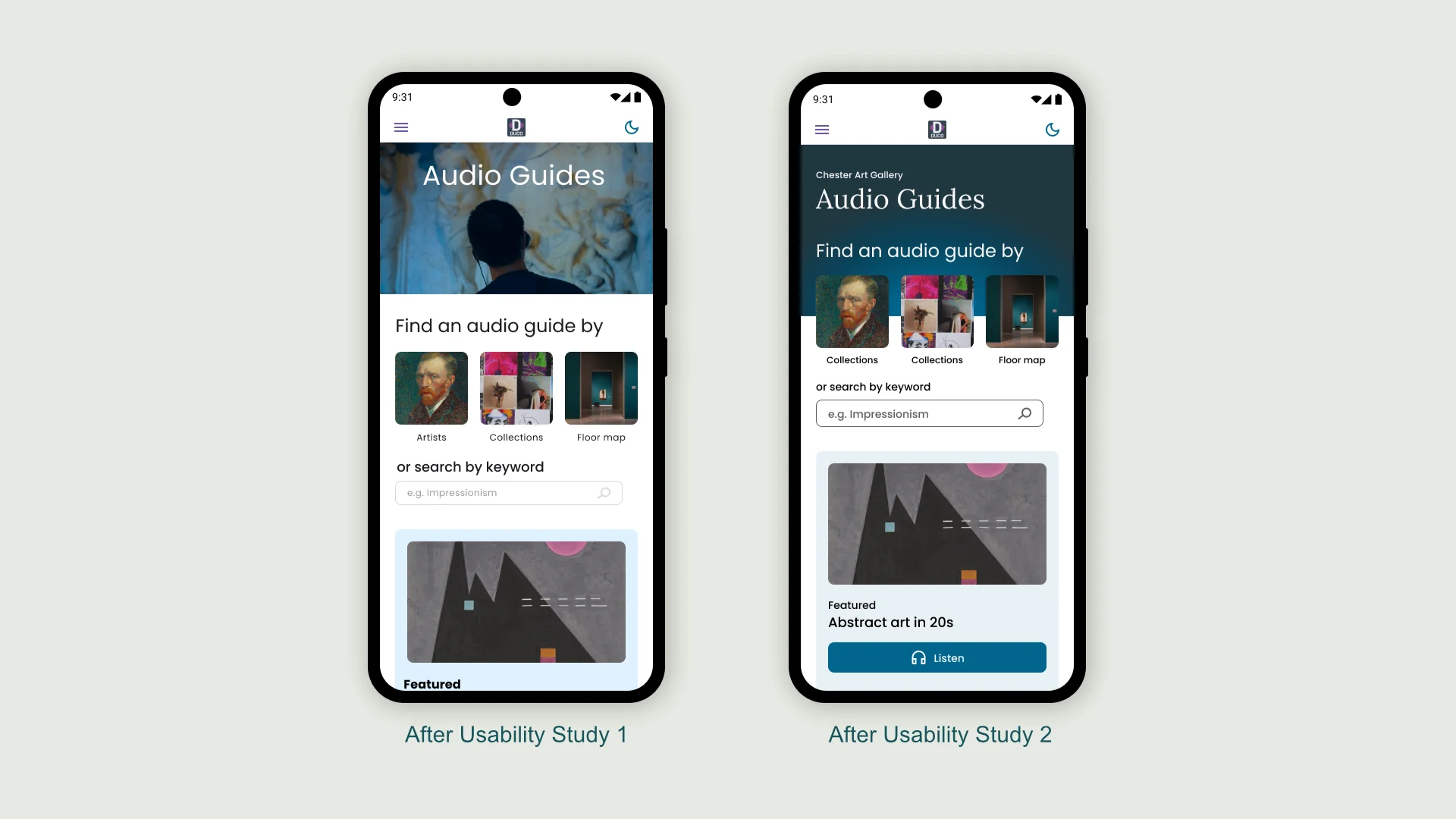
- Round 2: Language UI confusing, home layout not intuitive
- Refinement: High-fidelity prototype improved navigation, accessibility, and task flow
Refining the Design
Visual comparison
Before/after usability improvements (slider)
Key Mockups & High-Fidelity Prototype
Improved task flow and accessible, clear design
Takeaways
Impact:
Enhanced visitors’ gallery experience.
Peer feedback:
“With this app, I can study artwork efficiently or simply enjoy my visit to the gallery!”
What I learned:
- User research and usability studies are critical for meaningful design iterations.
- Even limited research can significantly improve prototypes and workflows.
 ← Pawsome